Christopher Tignor is set to release his latest album, The Art of Surrender, out later this month on Western Vinyl. I recently saw him perform in Montreal, which motivated me to gather some Tignor-related features I contributed to TSB many years ago. I have really vivid memories of listening to Nor’easter on my fire escape in San Francisco’s Tenderloin neighborhood, resulting in the effusive praise of the review below. When Slow Six were on tour supporting their following album circa 2010, the band crashed at my apartment in Montreal, and I hitched a ride with them to Boston for the following show. Tignor’s solo records, beginning with 2009’s Core Memory Unwound, saw his audience expand in an era in which “new classical” or “modern composition” (or whatever we were calling that scene without a name at the time) was finding crossover success. I don’t think I’d previous watched an artist we’d cover on TSB being praised on NPR before that. I kept in touch with various members of Slow Six over the next several years. I ran into Stephen Griesgraber (also of Redhooker) during one of the Unsilent Night processions in the East Village. Chris and Theo formed the duo Wires.Under.Tension, passing through Montreal for a show I have very hazy memories of. And I saw Jeff Young present work with ThingNY on various occasions, as well as taking part in a memorable 12-hour performance of John Cage’s Empty Words which culminated in a sunrise walk across the Brooklyn Bridge. But even earlier than all that, I remember Chris as the soundguy at CBGBs. CBs was a big part of my teen years, and while I know he doesn’t remember me from that time, I find a kind of significance in connecting with his work in a myriad of ways over more than two decades now. I’ll have more to say about the new record soon enough, but for now, here’s a post compiling some reviews of Slow Six and related groups.
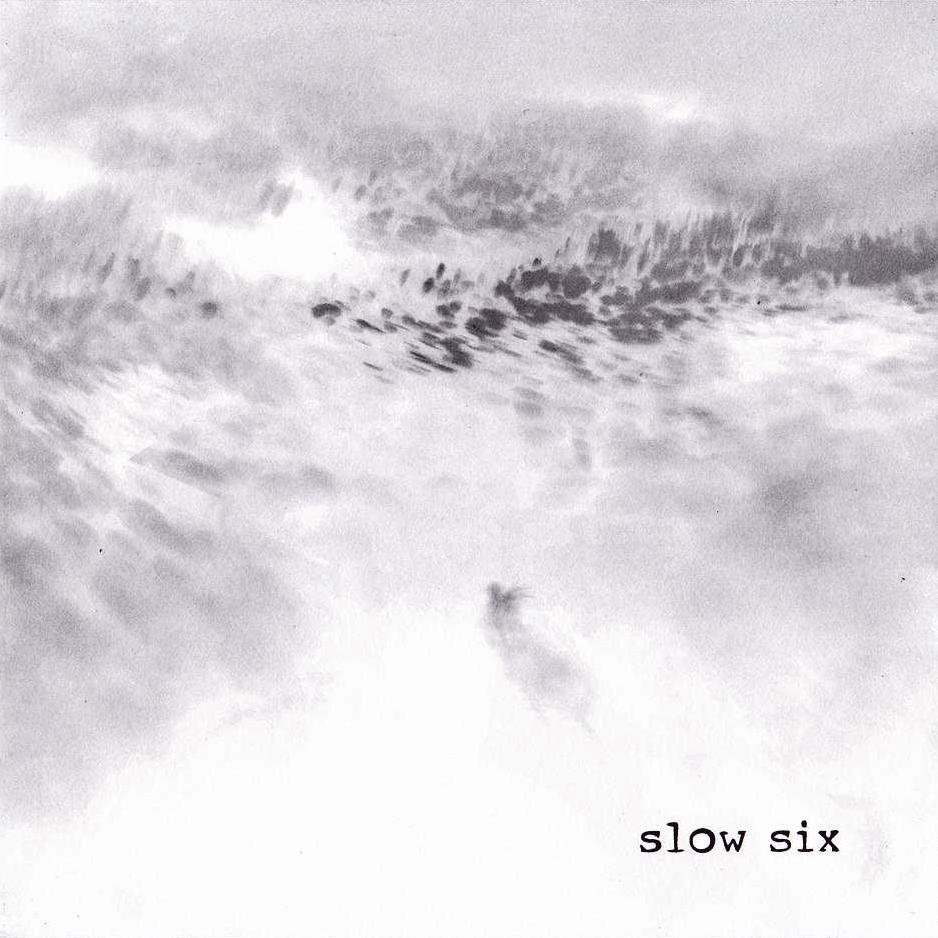
Slow Six – Nor’easter
Violins swirl over carefully plucked guitar chords, low strings rumbling below, while a Rhodes piano sets off on a beautiful, emotional, and sometimes turbulent musical journey. These wordless reveries are crafted by musicians who have a deep background in modern classical music, but their live shows push their influences further, engaging in Cage-like usage of live TV and radio broadcasts to add an aleatoric element to their music. Slow Six, a long-running group of committed musicians, have already released two critically acclaimed records, received favorable radio and press coverage, and have played in some of the most respected downtown NY venues. An eight-piece ensemble with a shifting line-up, they play an original brand of electronic chamber music, pairing their expressive post-minimalist instrumentals with video-art and other media.
Nor’easter moves with a melodic sensibility that is refreshing for a ‘minimalist’ group, showing that Slow Six are not to be confined by constructs, movements, or genres. They in fact seem to defy labels, blending musical virtuosity and intense artistic creativity, without allowing themselves to be pigeonholed into one style. While apparently claiming influence from the world of indie rock and espousing a DIY philosophy, these musicians are virtuosic on their respective instruments. The six long compositions on this release do not necessarily flow into one seamless work, but nor do they shift between styles, instead offering a captivating whole.
The musical direction of Christopher Tignor gives the band a unique identity, distinct from fellow New Albion artists, though certainly not leaving the realm of classical influence. The personal touches of the other musicians shines through however, particularly guitarist Stephen Griesgraber and pianist Rob Collins. Griesgraber in particular makes his presence felt, and, as in his other group, Redhooker, it is the guitar work that allows the band to straddle the worlds of classical and popular music.
Fusing traditional instrumentation with electronic effects, amplified strings, and the occasional percussion, Slow Six are in many ways representative of a new crop of bands emerging in NYC. For many listeners, especially those who aren’t already fans of classical or new music, classical musicians are considered be to too technical and lacking the raw emotion that seems to fire jazz and rock. This is unfortunate, however, as classical music offers a powerful and dynamic emotionality, one which has become easier to identify in these new ‘crossover’ artists. Although I will reiterate that Slow Six are not to be reduced to some cliché or lumped into some movement created by journalists and critics, I will also go as far as to say that they are one of the best new artist emerging from New York, and make me proud that my hometown is still churning out vital art such as this.
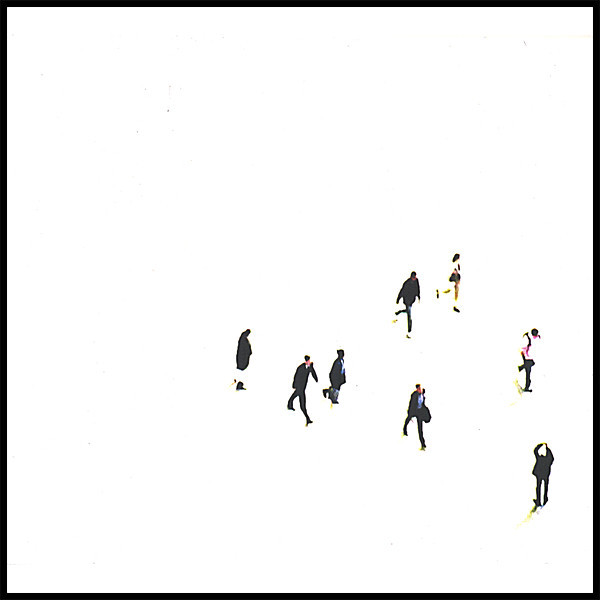
Redhooker – The Future According to Yesterday
The Future According to Yesterday is best understood, not as a short 4-song EP, but rather as one work in four movements. In just over 25 minutes, Redhooker are the latest example of the trend of classical musicians and composers crossing and blurring the line with pop. They would be the perfect act to appear in the second year of the excellent Wordless Music Series in New York, as they seem to embody this downtown, minimalist/classical/pop-fusion thing that can be scene in various clubs in the NY area (The Stone, Tonic, Galapagos, Symphony Space, etc) better than most.
Named for a neighborhood in Brooklyn, Redhooker features Stephen Griesgraber on electric guitar, Peter Hess on clarinet, and Griesgraber’s fellow Slow Six bandmates Maxim Moston and Rob Collins, on violin and keyboard, respectively. Lacking drums or beats, this means that the compositions rely on the interplay of the four musicians, and the repetition and phrasing of notes and melodies instead of the standard percussion, giving Redhooker a unique sound amongst the ‘post-rock’ crowd. The arrangements are in many ways reminiscent of minimalist composers like Steve Reich and Phillip Glass, although the pieces take far less time to build to their climaxes, and due to the interplay of the four instruments, it is unlikely that one would mistake these for compositions by the aforementioned artists .
Although the electric guitar is not a standard instrument one anticipates hearing in a classical quartet, the Rhodes piano actually seems to be what most distinguishes Redhooker. While seamlessly blending with the other three performers, keyboardist Rob Collins’ keys are what creates the ‘fusion’ element of this classical/electric fusion group, providing ambient drone as well as heavenly melodies.
It is a slow, subtle chord progression on the piano that first lulls us into the world of The Future According to Yesterday, followed by a somber melody on the violin, quickly followed by slow whole notes on the clarinet. “Sometimes She Gently Speaks” is merely the opening sequence of the movie, the prologue to the novel, and serves as the perfect transition into the much more dynamic second track, “Animus.” The Rhodes once again welcomes us into the track, playing a repetition of a phrase, then followed by the clarinet and violin each playing separate phrases to create of sort of polyphony. Worth the wait, the trio are finally joined by the Griesgraber’s guitar, which provides the work with a direction often lacking in minimalist compositions. Occasionally the guitar swaps roles with violin or clarinet, settling into creating rhythmic tension in their place, before switching back again as lead. The subtly changing repetitions and wonderful resolutions are just long enough to be interesting without stretching out the listener’s patience.
“Sunday Silence” allows the guitar and violin interplay to really carry the tune forward, dramatically building tension, which is diffused as the a drone carries us, after about 1:22, into the final movement, “Twelve Times Goodbye.” Again Collins begins with a 5-beat <I>ostinato</I>, as the other instruments trade off melodies, at times finishing each other’s phrases. This dreamy, melancholic record comes to a close, leaving the listener with the feeling of returning from a journey, returning full circle to wear we’d begun, but with enough opacity that our imaginations can run wild. (Not exactly unlike a certain Austin Post-Rock quartet that seem to be all the rage with you kids these days.) Redhooker are an excellent introduction into the new breed of young classical musicians blurring the lines of pop music, but should also appeal to anyone who loves beautiful, somber, background music.
Redhooker – “Telling Time”
The project of Stephen Griesgraber, who has contributed guitar to Slow Six, Redhooker’s unique style captivated me from first listen. Not too long ago, I had the chance to catch a wonderful performance of theirs at a special venue called Monkey Town in Williamsburg during the CMJ festival. Earlier this year, The Silent Ballet released a new song from Redhooker on our 9th compilation with Lost Children. The track is called “Telling Time.” Download it here.
Slow Six -“The Night You Left New York”
From it’s opening track, Slow Six’s latest LP had us in its grasp. Quietly swelling guitar, plucked violin notes bouncing around like raindrops, the Rhodes fading in while the first mournful pulls of the violin set the mood. By the time the drums kick in and the main motif enters, it’s already apparent that this is a group who’ve mastered their craft. “The Night You Left New York” sets the tone for the rest of the record, taking everything we loved bout Sl6w’s prior work and injecting it with more energy. Dueling violins perfectly play off the other instruments building tension slowly, reaching a peak of emotion without falling into the tired clichés of the crescendo-to-climax. Lovely stuff.
Christopher Tignor – Core Memory Unwound
Tignor is the main man behind the excellent NYC new music ensemble Slow Six, but his solo album lets him explore electronics and a slightly different mood than with his collaborators. I’m looking forward to more material with his ensemble, but Core Memory Unwound is a nice treat all its own. David Garland did a great episode of Spinning on Air with Tignor on WNYC. Check it out in their archives (if you can still find it).
Wires.Under.Tension – Light Science
Yet another stunning release from Christopher Tignor, Light Science pairs the composer with his Slow Six bandmate, drummer Theo Metz, exploring more kinetic and beat-driven compositions than on previous work. Wires.Under.Tension was originally the name of Tignor’s software development work, and this is appropriate as he uses this project as a vehicle for a more in depth explorations of the potential for his custom software, which allows for a very organic and expressive electronic manipulation of live acoustic elements. Metz’s propulsive beats and borderline danceable rhythms give the record a very visceral quality that is hard to overstate. And of course, Tignor’s violin features prominently, and any excuse to hear more of that is a welcome one.
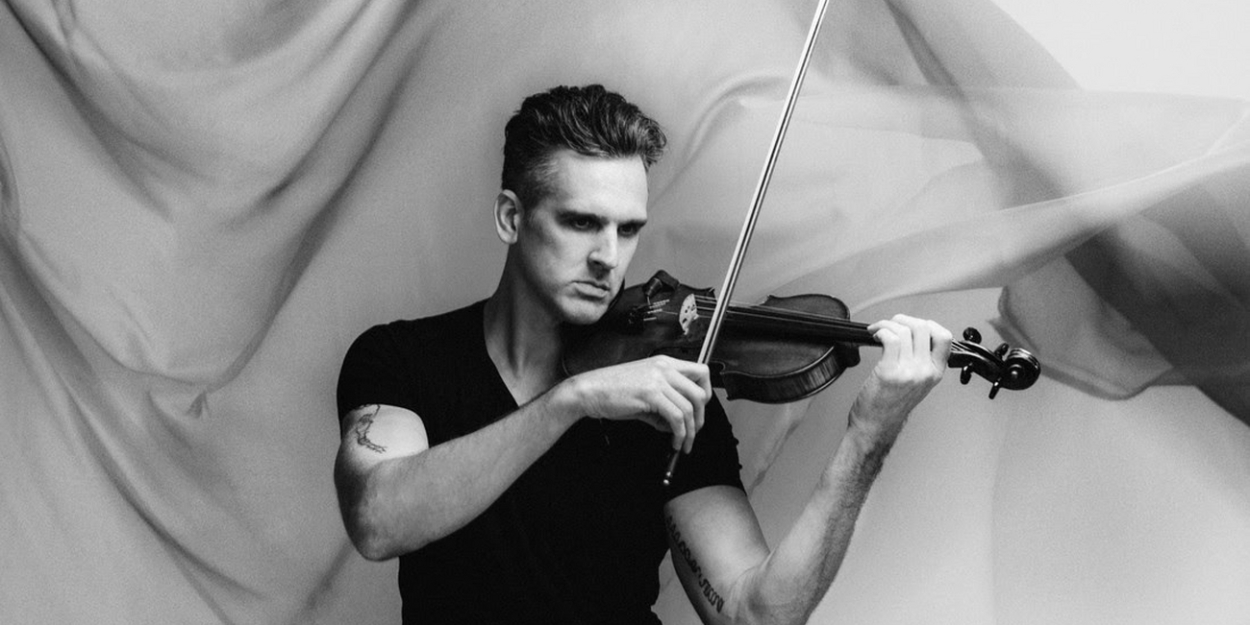
Interview with Christopher Tignor of Slow Six and Wires.Under.Tension
Christopher Tignor is best known as the man behind Slow Six, whose latest record Tomorrow Becomes You (Western Vinyl) received some mighty high praise around these parts. He also impressed us with last year’s solo work Core Memory Unwound, which pushed his compositional voice in a different direction, and has been featured on NPR and other prominent national outlets. Now Tignor has yet another project in the works, Wires.Under.Tension, with Slow Six drummer Theo Metz. We chat about composition, the live electronic aesthetic, New York’s “crossover” scene, and what the future holds for CT.
I’ve read that you created your own software which you used to manipulate, for instance, Stephen [Griesgraber]’s guitar. What inspired you to make software available to the common public? How did you even get into creating software of your own? Does Sl6w still make use of this? (From the few shows I’ve seen, it seems not.) If this is the case, what caused the move away from this approach? Does the software affect your composition or did you create the software to realize a specific goal? Or both?
I build software to transform live sound in different musical ways. You hook up MIDI controllers to it and play them like instruments. The point is to create electronic expressions that directly reflect both your fellow performers’ playing as well as your own choices on the instrument. To keep things live and fresh, these instruments avoid pre-recorded samples. I started long ago, back when Max/MSP first came out building audio processing patches for composer Richard Teitelbaum, my old mentor. After studying computer science proper, I since moved over to Java. But I may well be porting a lot of my work back into old Max/MSP using a combination of C++ and Java since I recently picked up a sponsorship from Ableton and Max/MSP now runs inside Ableton….This is becoming particularly important for my new band, Wires.Under.Tension which I’m particularly excited about.
All the software comes out of “hearing” a musical idea that I think might bear fruit. It’s easy for me to think in terms of musical processes and what they might sound like – if I sample this kind of violin playing and transform it like so while doing something else on the drums, it may sound like this…and so on. So composition and live process are inherently linked just like anyone who uses their instrument to write, “hands-on.” As an electronic musician one of my main instruments is live electronic transformation and there’s a palette of techniques built into my ear at this point. On each record I’ve put out I’ve expanded that palette, which usually leads to new software. Building your own stuff helps you get unique sounds too which is important.
Slow Six certainly makes use of live processing though I’m playing more violin now. When the club set-up is inhospitable, due mostly to an inadequate sound-check or sonic environment then I minimize or drop the interactive component. But there are key moments in the TBY set where it shows up, even more so than on the record, environment permitting.
What other bands do you find employ an all-live aesthetic to their electronic elements? Do you always employ a laptop or just use a looping pedal?
Pedals and laptops all have their place and really serve different purposes for me. I use plenty of effects on my violin for the newest Slow Six songs including a looper. The computer is exclusively for the deeper, more interactive processing.
I’d like to think the “all-live” electronic aesthetic is something Steve inherited for Redhooker given his many years watching me sweat through it in Slow Six.
In terms of labels, Slow Six often get lumped into this group of classical crossover, uptown/downtown genre blurring acts. I think there is something to this trend, though stylistically it doesn’t necessarily mean much. Some terms resonate more than others, and though we all talk about our dislike of labels, of course boundaries are inevitably drawn. (Boundaries that may be more or less fluid, but boundaries nonetheless..) How do you feel about this new ‘crossover’ borderless scene, particularly the one developing in NY? (One which Sl6x has been an early participant.) Do the sorts of shows that Wordless Music puts on signal some sort of important shift? I can imagine a venue like le Poisson Rouge is a blessing, as the sound is excellent and the space invites listeners to perhaps be a bit more contemplative than seeing a band like Sl6x in a rock venue.
For me there’s just the songs and what kind of experience we’re after when we show up to listen. People certainly put on a different set of ears when they go to a rock show then to see Liszt at Alice Tully Hall but all the rest of it is just for those that like copy which translates well into blog form.
As for venues, I think people really mistake “classiness” and even acoustic fidelity for quality. Personally, the most musically gratifying live experiences I’ve been part of are where a shit ton of people are crammed into some sweaty room right up against the band, no stage. The most important thing is to feel urgently connected with the musical experience – to remove the safe distance – you really don’t want to be *too* comfortable really. The whole dinner-theater set-up really encourages you to be more concerned about whether you remembered to tip your waitress or what your date is wearing. So damn mature and user-friendly. Don’t forget to do your little golf-clap when the music stops. 9 times out of 10 those people just aren’t really listening.
It’s great to hear you say that, actually. The DIY punk spirit lives on in unlikely places, eh?
So, why did you make a solo record? The material goes places that your other work doesn’t seem to. Were you just struck by a different mood? The record clearly explores different musical ideas, more piano and different timbres. Slow Six seems more dynamic, really making the most of the second violin. You mentioned last time we spoke that you had another project with your drummer on deck. Can you talk about this as well?
I’d say your second sentence answers the first. My goal has always been to be a full-range musician, capable of expressing any part of myself I can get in touch with honestly through music. The new Wires.Under.Tension record, out soon will certainly turn many on to a new sound which I’m also intimately connected with, a higher energy, dynamic. Lot’s more leaning into the wind. Orchestrated out with lots of amazing guests including Jared Bell of Lymbyc Systym. Deeply electronic with some truly brutal drumming by Theo Metz, Wires.Under.Tension’s better half.
It was great to see Jared [Bell] playing with Slow Six on the tour last May. Lymbyc Systym also really impressed me with their live performances. Definitely looking forward to hearing the Wires.Under.Tension record. The timbre of instruments seem to be important to your compositions. The violins for instance do what a lot of double horns do in jazz.
My writing style I generally prefers songs that focus on specific color pallets as opposed to jumping around throughout the work. I find it more embracing and look for dynamicism elsewhere. I like to wrap identical pairings up in one another for the similar reasons.
Other than Stephen, it seems like the musicians playing on each Slow Six record, not to mention live shows, have changed quite a bit. How have these changes influenced the direction of the group? Does touring with different musicians keep the material fresh and add a unique dynamism to each iteration, or would you prefer to settle into a more fixed line up? I suppose I ask this because I’m curious to hear more about your role. Stephen has his own project (Redhooker, whom I quite like,) and you have your solo project as well, so I’m wondering what the relationship is between the composer and the group.
That’s not entirely true. Most people are good for at least two records, about 4 or so years. We’re dealing with professional musicians which changes the game. In all my projects so far I’ve been the songwriter. All of Slow Six was scored out until our last record where I consciously decided I wanted a much more “rock-band” sound. The tools you use leave their mark on your work so handing out through-composed scores I realized would be the wrong choice. So I’ll write all the major melodies, harmonies and interlocking patterns out and the a rough script for the song structures and in rehearsals
we can piece together how long to stay on a certain section and other arrangement choices. I encourage people to riff off what I present which has lead to some cool new places for sure. Then I’m constantly revising the materials between rehearsals, inserting new ideas and polishing up old ones for all of us to knock around next time. It takes a certain skill-set to be able to work that way which is why the players in the band are so unique (and hard to find). Really, being a producer is about learning how to keep your vision focused and singular while getting the best out of the individual personalities of the players.
For Wires.Under.Tension it’s much simpler because I handle everything that isn’t the drum part and Theo and I just give each other feedback as we rehearse and I evolve the composition between rehearsals. As in all things, keeping your ears on for new possibilities is key.
The latest Sl6x record has noticeably more energy than in the past. The obvious change in this regard is the addition of the drums, which gives the music more drive while also evoking all these rock comparisons. Can you talk a bit about the decision to add drums? How did the compositional process vary in working with drums? The drums really add a different vibe on this latest record. What role do you have a composer in the drum beats?
After Nor’easter it seemed most interesting to dig into our rock roots and see how we could best approach that language in our own way. The formation of a consistent line-up throughout the entire record including drum as well as the new way of developing the music was key for that. For the drum arrangements I find it works best to describe what I think will work best and then give feedback as Theo works out the part for himself. That’s also been the case for a few guitar parts on TBY too.
Your earlier records also made use of radio samples. You use some in “Cloud Cover,” maybe other new songs too, but they seem less prominent at least. Were these random or chosen purposefully? (I imagine Cage’s Imaginary Landscapes as an influence here.) What brought on the inclusion of these elements in your music? Can we expect to hear more?
It’s just AM radio. I’ll look for certain aesthetic qualities in the content when spinning the dial but it’s just what’s on really. It came from playing rhodes in my room alot while the radio was left on in the background. It changed the way I played the instrument and felt so I new there was something deeply musical there. I think the radio component is in some ways *more* important on TBY as it’s used structurally to segue from the second half of “Cloud Cover” into “Because Together We Resonate” as I feed the speech content into my MusicBox software, turning the thing into a sort of resonant, electronic tambura. That drone becomes the foundation for the piece.
As for expecting more, the Wires.Under.Tension debut, “Light Science” features a bit of live air-traffic controller chatter in it’s 5th cut, a source I’ve been totally fascinated with for a long time (check out http://www.liveatc.net/).
Any plans to release your music on vinyl? It seems a bit cruel that a label called Western Vinyl didn’t release TBY on vinyl. How do you feel about the attention vinyl’s been getting lately? Any thoughts about this transitional state the ‘industry’ is going through?
Light Science will only be available out in the states in digital in vinyl formats. & record in JP is doing a CD so you’ll have to get it as an import if you’re still into those disks. This was an intentional decision as the vinyl and digital versions are slightly but importantly distinct. On the digital version all the tracks are stand-alone songs. The vinyl version has an extended version of one track and present the last two tracks as one continuous multi-part piece. I did this to address the different ways people listen to
these two formats. The digital landscape is a shuffle-able one and your contribution need fit in accordingly. It always seemed weird that sections of my longer songs could be floating around without their predecessors. So the vinyl version is there for the long-form listening experience.
Should we all just listen to classical? Is the rock idiom still worthwhile? Can you channel the energy of rock music and still be compositionally sophisticated? (The most recent Sl6x album seems, to me, to be after this goal.) On that note, any new artists you’veheard lately that excite you?
Really, young people’s ears in the places we’re referring to are to big a moving target these days to meaningfully pinpoint with such broad descriptors like “idiom”. These people just don’t really hear music like that. Sure people have their personal references and tastes but the rock-world is more appreciative now of instrumental and experimental approaches than perhaps it’s ever been. As a music-maker, if you just ignore all such chatter and try to really keep pushing yourself and what excites you, the energy channels itself and any notion of being sophisticated or unsophisticated really loses meaning.
Thanks, Christopher.
 Sound Propositions
Leave a comment